

Thinking about installing your battery storage system outside? You’ve probably seen terms like “IP65 rated” or “outdoor approved” and assumed that means it can handle Scottish weather. Here’s what you actually need to know.
“Outdoor Rated” Doesn’t Mean Weatherproof
An IP rating tells you what a battery can survive during testing – not what it should endure day after day. Even equipment rated IP65 or IP66 (protected against water jets and dust) needs proper shelter from rain, snow, and direct sunlight.
Think of it like a waterproof jacket. Yes, it’s water-resistant, but you wouldn’t leave it hanging outside in the rain for years and expect it to last.
Why Scotland Makes This Even More Important
Scotland receives over 1,500mm of rain annually – over 170 days per year in most areas. Your battery system needs to work reliably for 10-15 years. Constant exposure to moisture and temperature changes makes proper shelter essential for warranty compliance and long-term performance.
When “Occasionally Sunny” Voids Your Warranty
Here’s a real example of why this matters. A site in Aberdeen had 20 Solis inverters installed on a north-west facing wall. The installers assumed minimal sun exposure meant no protection needed.
The result? Despite rarely having sun on them, occasional late-day sunlight caused the inverters to overheat. More than 50% failed. Solis refused to honour the warranty because the equipment had been exposed to direct sunlight.
Rain protection is important – but direct sunlight is equally critical. Even occasional exposure can void warranties and cause equipment failure.
What a Proper Outdoor Installation Actually Needs
Whether you’re adding battery storage to existing solar panels or installing a complete system, here’s what matters:
Overhead Protection
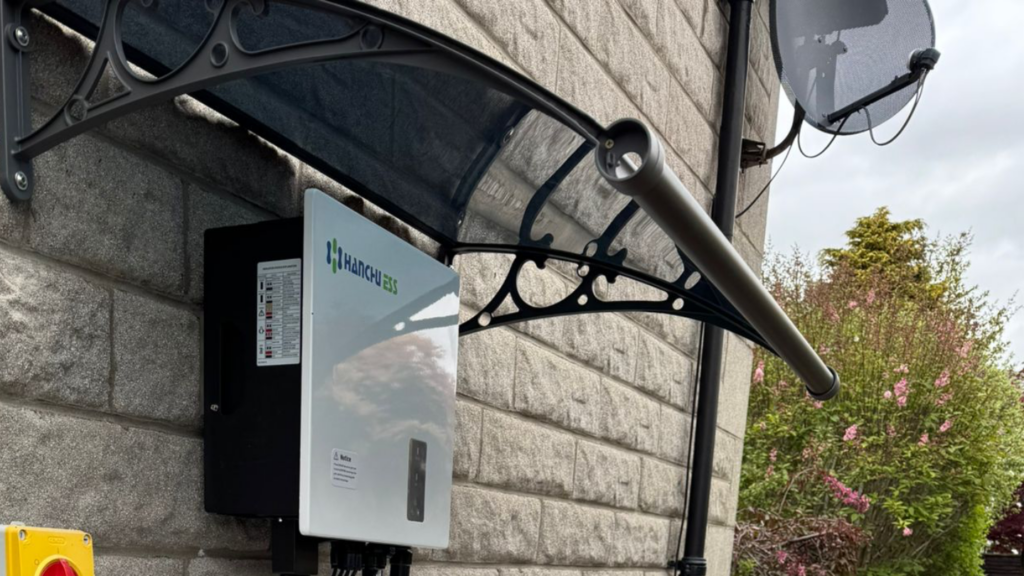
Rain shelter, protective canopy, or installation under eaves. Direct rainfall and snow accumulation must be prevented. No standing water around the unit.
Protection from Direct Sunlight
This is non-negotiable. Batteries generate heat during operation – direct sunlight adds thermal load that reduces efficiency, triggers overheating protection, and can void warranties. Even north-facing walls can receive occasional sun exposure in Scotland’s summer months. Your installation needs consistent shade.
Proper Ventilation
This is where installations often fail. Your battery needs airflow for cooling – typically 150-300mm clearance on all sides. The shelter must protect from rain and sun while allowing air circulation. Fully enclosing the unit in a sealed box will cause overheating.
Protection Solutions That Actually Work
Several approaches deliver compliant protection:
Purpose-Built Cabinets with Rain Shelters
Combine overhead rain protection with ventilation. These shield equipment from both rain and sun while maintaining necessary airflow.
Custom-Made Covers
Designed specifically for battery systems, these provide weather and sun protection while maintaining ventilation. Solar Trading UK offers options with better aesthetics than standard industrial shelters.
Strategic Positioning
Installing under eaves, soffits, or canopies works when positioned to prevent both rain and sun exposure throughout the year.
Why This Matters for Your Investment
Battery systems start from around £4,000 for basic capacity, ranging up to £15,000+ for larger installations. Improper installation can:
Void your warranty – Manufacturers require proper environmental protection from both rain and sun
Reduce performance – Temperature extremes and overheating decrease capacity and efficiency
Shorten system life – Poor protection can cut years off your battery’s lifespan
Affect SEG payments – MCS-certified installation is required to earn money from exported electricity
How We Approach Outdoor Installations
At Ceiba Renewables, environmental protection is standard. We assess your property’s conditions – weather patterns, building orientation, year-round sun exposure – and design protection that works.
Every installation is MCS-certified and manufacturer-compliant. You get complete documentation including warranty registration and SEG certification. We’ve completed installations from the Highlands to the Borders – we know what works in Scottish conditions.
What to Ask Your Installer
Before committing to any installation, ask:
- How will the battery be protected from rain and snow?
- How will you prevent direct sunlight exposure throughout the year?
- What provision is made for ventilation and cooling?
- Does the design maintain manufacturer clearances?
- Will this maintain warranty coverage?
- Is the installation MCS-certified for SEG payments?
If an installer suggests simply mounting equipment on an external wall without discussing protection from both weather and sun, that’s a warning sign.
Absolute client/customer focus… excellent design, install and aftercare service.
Protecting All Your Outdoor Electrical Installations
The same principles around weather protection, ventilation, and sun exposure apply to EV chargers too. If you’re considering a full renewable setup, it’s worth getting everything assessed together.
Get It Right From the Start
We offer free site assessments where we evaluate your property and design a system that works reliably in Scottish conditions. All protection equipment and installation costs are included upfront – no surprises.

Let’s Create a Sustainable Future Together
Contact Ceiba Renewables today for a free assessment.