
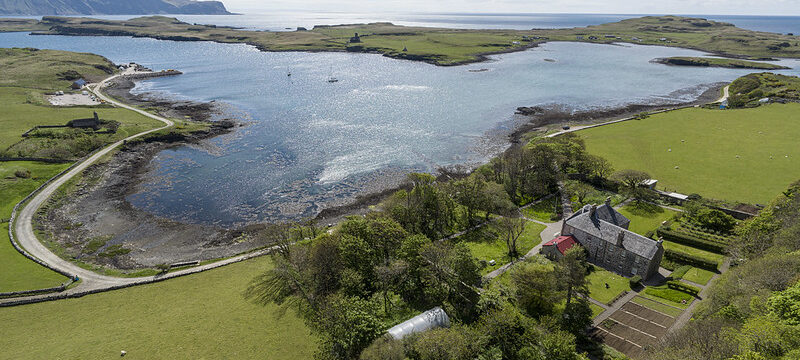
Location
Canna House, Inner Hebrides, Scotland – a vital cultural archive for the National Trust for Scotland (NTS)
The Brief
The Isle of Canna in the Inner Hebrides, home to approximately 17 residents, is powered by an independent microgrid using wind, solar, and a diesel generator. This grid is frequently unstable, causing power outages, particularly during the summer tourist season.
Canna House, a key cultural archive for the National Trust for Scotland, is located on the island. It houses irreplaceable Gaelic heritage items, including rare manuscripts and early audio recordings. Protecting these artefacts requires a constant power supply for strict environmental control, which the existing grid could not reliably provide.
The National Trust for Scotland commissioned Ceiba Renewables to reduce Canna House’s demand on the island’s microgrid, especially during peak tourist season when the combined load often caused power failures.
The project had the following objectives:
- Grid Load Limitation: Limit Canna House’s energy consumption from the microgrid, particularly during the peak hours of 5 pm to 11 pm.
- Backup Power: Ensure a reliable backup power source to maintain continuous environmental control and preserve the artefacts during grid outages.
- Heritage Sensitivity: Complete all installation work with precision to protect the historic building, which had recently undergone a £3.6 million restoration.
Our Approach
To address these unique challenges, Ceiba Renewables consulted with leading global manufacturers to design a robust, custom-engineered solution. We implemented a state-of-the-art battery storage system consisting of three 15kW Victron Multiplus Inverters combined with 40kWh of BSL Batteries.
Our strategy focused on intelligent load management:
- Strategic Charging: The inverter battery system was programmed to charge during the night (11 pm to 8 am), a period of low demand on the island. The charge rate was carefully set to ensure the combined load of the house and battery charging did not exceed 5kW, protecting the microgrid stability.
- Island Independence: We configured the system to take Canna House entirely off-grid from 8 am to 11 pm. During this 14-hour window, the house runs solely on stored battery power, drawing zero energy from the island’s microgrid.
- Remote Management: Given the remote location of the Isle of Canna, we utilised Victron technology to allow for remote system monitoring and fine-tuning. This ensures we can adjust to seasonal load changes without the need for immediate on-site intervention.
Implementing this project required logistical precision and collaboration. Our team worked closely with NTS conservation teams and Harley Haddow engineers to install the system without disrupting the delicate environment of the house.
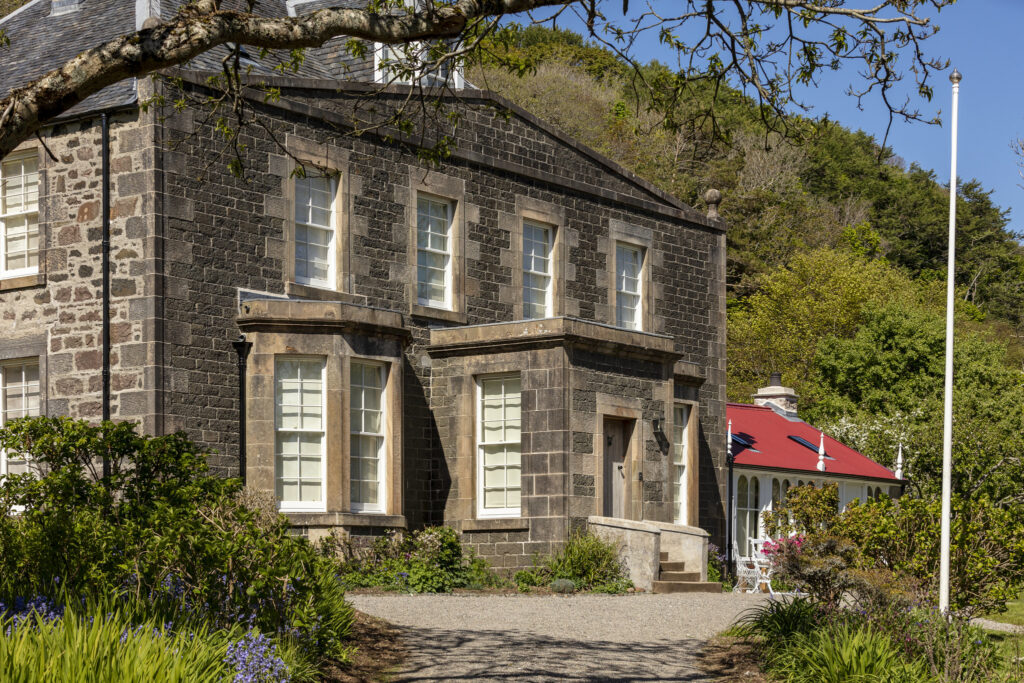
Photographer Steven Gourlay Photography Ltd and © National Trust for Scotland
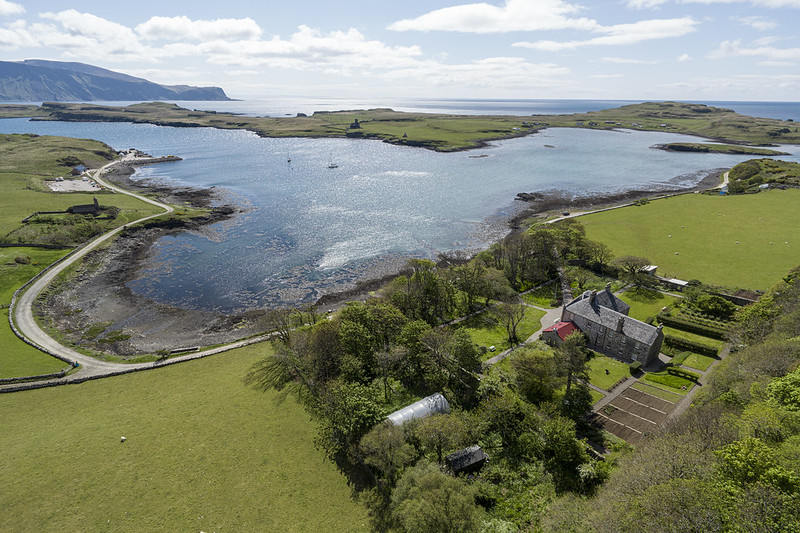
Photographer Steven Gourlay Photography Ltd and © National Trust for Scotland
The Result
The installation has delivered immediate and measurable success for Canna House and the wider island community.
- 14 Hours of Independence: Canna House now operates independently from the island’s microgrid for 14 hours every day. During testing, even when the house load was maximised to 24kW, the battery system provided all necessary power without drawing from the grid.
- Enhanced Resilience: The reliance on the diesel generator has been significantly minimised, reducing the environmental impact and fuel costs associated with the island’s power generation.
- Cultural Preservation: The system ensures a stable power supply for the heating and cooling pumps, maintaining the optimal temperature and humidity required to protect the rare Gaelic archives and butterfly collections within the house.
“I was delighted when we loaded up the power in the property and the batteries provided all of the power to the house without skipping a beat.” — Duncan Crosthwaite, Ceiba Renewables.
Conclusion
The Canna House project demonstrates that modern renewable energy solutions can be successfully integrated into the most sensitive and historic environments. By combining expert engineering with high-quality components, Ceiba Renewables provided a solution that protects Scotland’s heritage while embracing a cleaner future.
While this project addressed the unique constraints of an island microgrid, the technology is equally applicable to mainland properties. Businesses and homeowners facing grid capacity issues or seeking to reduce bills by utilising off-peak tariffs can achieve similar energy independence and cost savings.
To discover how a tailored battery storage solution can benefit your property, book a free consultation with Ceiba Renewables today.
The Ceiba Renewables team delivered exactly what we needed—an energy solution that reduced our costs while fitting perfectly with our historic building. The process was smooth from start to finish, and the team’s attention to detail was exceptional.

Start Saving with Solar Today!
Book a free consultation to see how Ceiba can help you save money and reduce your carbon footprint.